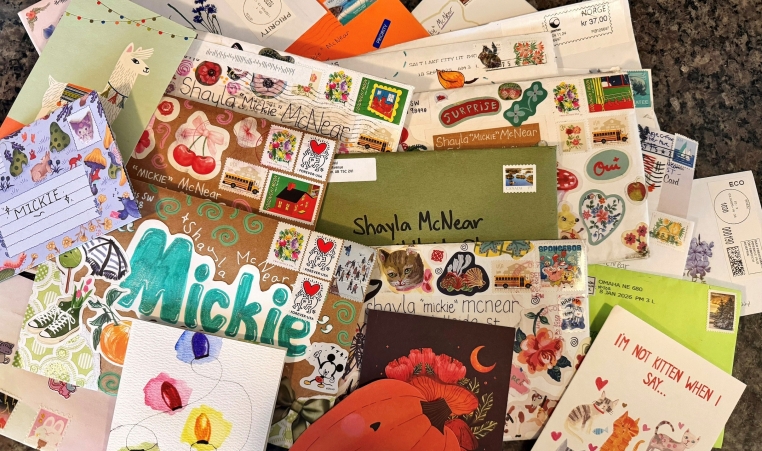
There is a special sense of wonder and excitement people get from something handcrafted specifically for them. A painting of a family pet, a scarf knitted from yarn your grandchild said felt so cozy when they felt it, or even a bracelet spelling your name by a friend at summer camp. Technology has moved communication between loved ones further and further into uniformity. Sure, you can create a sense of individualism with emojis you prefer over others, how you craft messages and responses, etc. But a text doesn’t typically inspire the imagination and sense of home that a handwritten letter can.
"We often seek to do what is easiest because of the amount of time something might take instead."
How might we reframe how we spend our own time, and how can we involve our children in the process? Snail mail. There are so many delightful ways to teach kids unique skills at camp, but one that caregivers can easily be a part of is letter writing.
WHY DOES IT MATTER?
In 2013, Business Insider indicates that the median number of texts a teenager sent per day was 60. A research report done by Common Sense Media in 2023 then suggests that texts from regular phone messaging has decreased, and the influx of social media apps and overall notifications have increased. It indicates the median number of notifications a teen received in a day was 237, though the variance was incredibly high, some reaching above 4,500. Snapchat and Discord alone provided 100s of notifications per day for many of those that participated in the study, demonstrating that texting is still a primary form of communication in today’s world.
What if instead, we teach our youth how to create connections outside of social media with appropriate mediation of caregivers? This could be among family members, established friendships, or even to international penpal organizations (often developed in a school-wide partnership!). For teens learning different world languages, this is an incredible way to practice bilingual written skills! There are also established organizations such as Global Penfriends that have built a detailed FAQ to demonstrate what they are doing to keep children in engaging in snail mail safe and have a thorough approach to keeping the community up to their standards.
HOW CAN CAMP HELP?
Building up the independent skills of kids is what we do best at camp. An overnight camp experience helps them take on responsibilities differently than they might at home. They will learn how to take care of their shared living space, help set up and clean up each meal in the dining hall, and so many other life skills.
This summer at Kitaki, we will be placing “Penpal Kits” in the cabins. It will include things like how to write an address and place a stamp on an envelope, how to make your own envelope out of paper, how to seal an envelope, coloring tools, and writing utensils.
HOW CAN I PREP MY KIDS FOR CAMP?
Over my years at camp, I have seen many kids receive Magic Mail and letters, and have seen the joy they get from that form of connection with their loved ones. Often when kids are interested in replying, the caregiver might pre-address return letters for their kids no matter their age. Something I would love to see more of is the confidence of youth being involved in the process of getting ready for camp – and this even includes letter writing!
Consider implementing these ideas into your routines leading up to your time at camp:
- Practice writing together and addressing/stamping letters
- For those still working on their handwriting, pre-address & stamp your envelopes to drop off at camp
- Start setting more tech-free time and spend more time outside
- Encourage creative or imaginative playtime outside for all ages
- Have conversations about meeting new people, what they like about their friends, and how they like to make new friends
Help foster the skills to be confident in a new space or with new people while feeling supported by their loved ones at home.
WHAT SHOULD I DO NEXT?
Start with a conversation with your children about mail and find out what they know already and help them bridge the gap with their learning with some of the resources highlighted above. Encourage your camper to practice writing a letter and sending it to a loved one if they never have before (encourage the recipient to send something back in return!). Spend time connecting with your camper about how letter writing can be a way they connect with family at home during their week at camp. Help empower them to ask their counselor for help if they are ever uncertain in their skills, no matter what that skill may be.
Who will your next letter go to?
Upcoming Stuff at Camp
- You and Me Day - Spend a day at Camp with your Camper!
- Women's Wellness Weekend - Relaxation at Camp for You!
- Spring Adventure - Try Camp Out
Further Learning
When writing snail mail, kids will learn about how the postal system can reinforce skills like counting, reading, storytelling, handwriting, art, geography, and more – as indicated in this post by Naomi Bulger! In her blog, Naomi Loves, she indicates a variety of awesome activities to engage kids. Two of my favorites for our younger children include: helping kids sort your junk mail based on color, theme or size, another is setting up delivery stations with different addresses and having mini addressed cards for them to practice delivering mail.
Check out this neat federally funded program that was in many schools in 1997 that developed an overall curriculum called the Wee Deliver In-School Literacy Program. This program provided students with different roles to learn more in depth about the process of mail delivery as a whole while also being intentional on developing literacy skills.